UX Research on Online Reviews
An external UX research case study based on the qualitative analysis of public user reviews
UX Research · Critical analysis · Narrative data
Research Context
Online reviews play a central role in e-commerce
decision-making, especially in product categories that are subjective, experience-based, or difficult to evaluate upfront.
During my internship as a UX Designer at a e-commerce startup (Donna Vino), I observed relatively low user interaction with the reviews section compared to other product areas.
Online reviews play a central role in e-commerce
decision-making, especially in product categories that are subjective, experience-based, or difficult to evaluate upfront.
More broadly, this observation resonates with a wider social context in which people are increasingly exposed to large volumes of mediated content and may experience growing uncertainty around credibility, authenticity, and trust in online information.
In this environment, reviews may function less as neutral information sources and more as narrative tools through which users rationalize, confirm, or question prior expectations, making their role in decision-making less clear and worth investigating.
Problem Framing
Despite the widespread presence of reviews in e-commerce, it remains unclear what kind of signals reviews actually provide about trust and decision-making.
Reviews are expected to support trust and confidence, yet often appear fragmented or difficult to interpret.
It raises questions about whether they function as decision aids or as retrospective narratives shaped by prior expectations.

What narrative patterns recur across user reviews?
Which linguistic or structural elements signal trust, skepticism, or bias?
In which cases do ratings and written narratives diverge?
Research Foundations Existing Research
Before conducting the qualitative analysis, I reviewed existing academic and UX research on online reviews, trust, and decision making to ground the study in established knowledge.
Research shows that online reviews influence trust primarily through narrative content and tone, rather than ratings alone (Qiu et al., 2024)
Studies highlight how expectations shaped by branding and price influence how experiences are later rationalized in reviews (Peña-García, 2024)
UX literature frames online reviews as qualitative UX signals, requiring interpretive rather than metric-based analysis (UXPA Journal, 2023)
Consumer research explains post purchase evaluation through Expectation-Confirmation Theory, where satisfaction depends on the alignment between expectations and perceived experience (Oliver, 1980)
Referencies:
Qiu, L., et al. (2024).
How online reviews affect purchase intention: A meta-analysis.
Journal of Retailing and Consumer Services.
Journal of Retailing and Consumer Services.
Peña-García, N. (2024).
Online reviews, trust, and customer experience.
Journal of Business Research.
UXPA Journal (2023).
Using Online Reviews as UX Research Data.
UXPA Journal.
Oliver, R. L. (1980).
A cognitive model of the antecedents and consequences of satisfaction decisions.
Journal of Marketing Research.
Research approach & scope
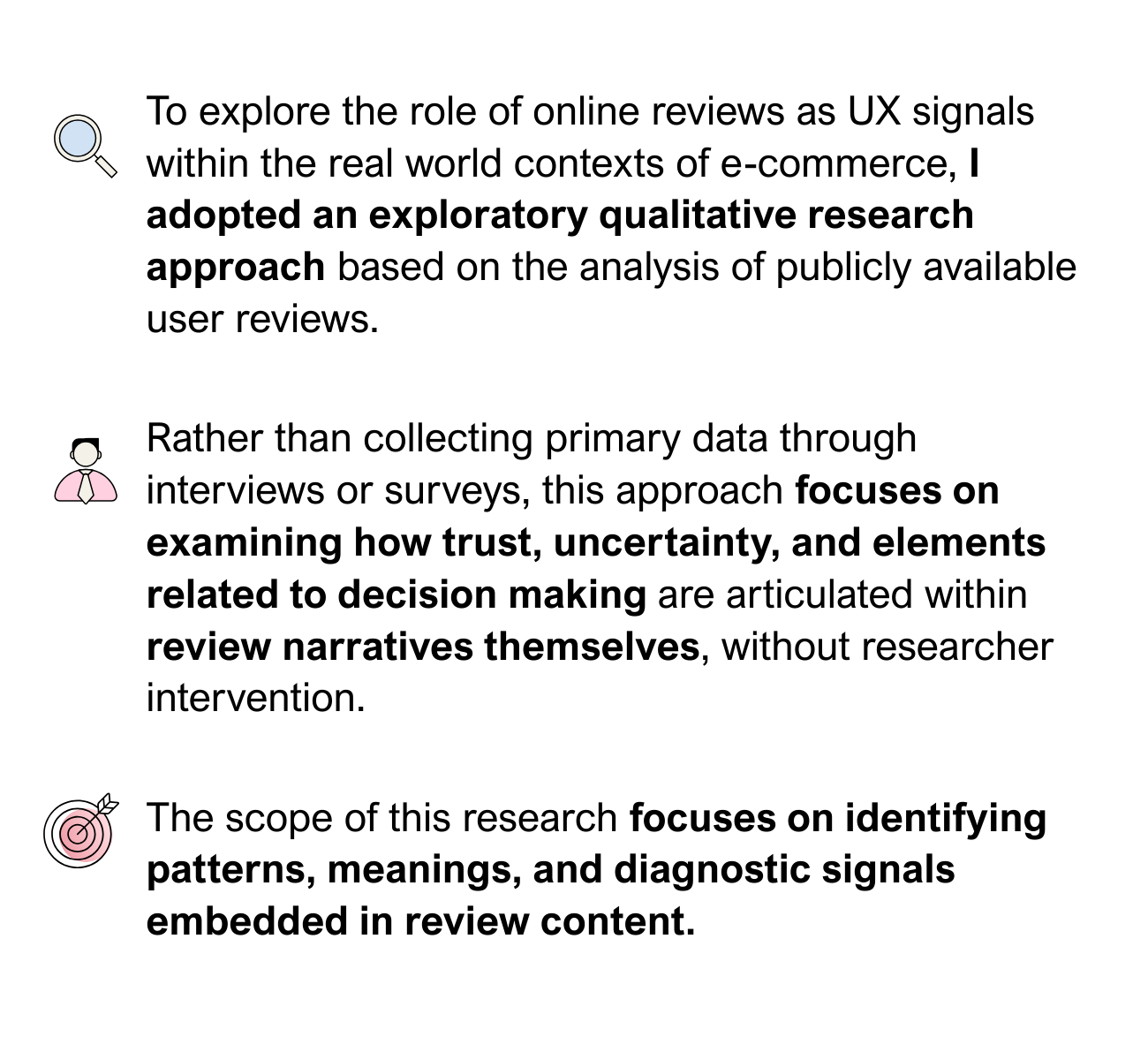
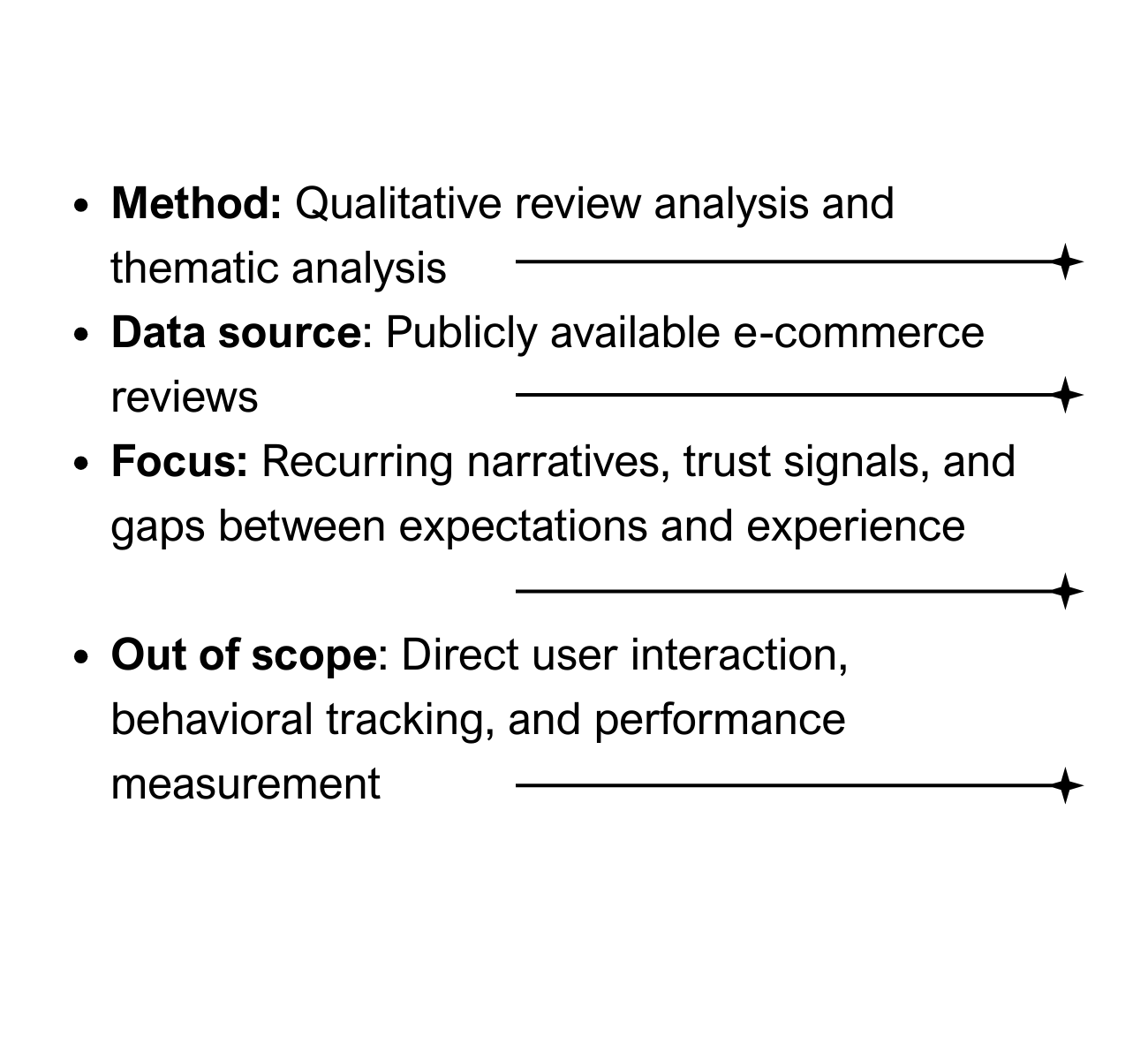
Case Selection: Boozt
For this research, the analysis focuses on Boozt,
a well-established Nordic fashion e-commerce platform.
Boozt provides a suitable context to explore how reviews reflect expectations, bias, and trust rather than objective product performance.
This research does not assess Boozt’s business performance or UX quality, but uses the brand as a concrete case to examine reviews as diagnostic UX signals.


Sampling Strategy
100 public reviews analyzed
Reviews collected over the last 10 months
10 reviews per month, evenly distributed over time
Reviews selected randomly within each month
Star ratings were not used as a selection criterion
This approach avoids biasing the dataset and allows an unbiased analysis of the relationship between ratings and written narratives.
Methodology overview
To analyze the review dataset, I used AI support to assist with the initial thematic grouping of review content.
The analytical work was then carried out manually through the following steps:
Transforming emerging patterns into coding categories
Defining sub-codes to capture nuances within each category
Linking codes to quote types (recurring narrative forms), rather than to individual reviews
The coding process followed an inductive qualitative approach, inspired by Grounded Theory and Thematic Analysis, focusing on recurring experiential patterns and their explanatory relevance, rather than on predefined UX metrics

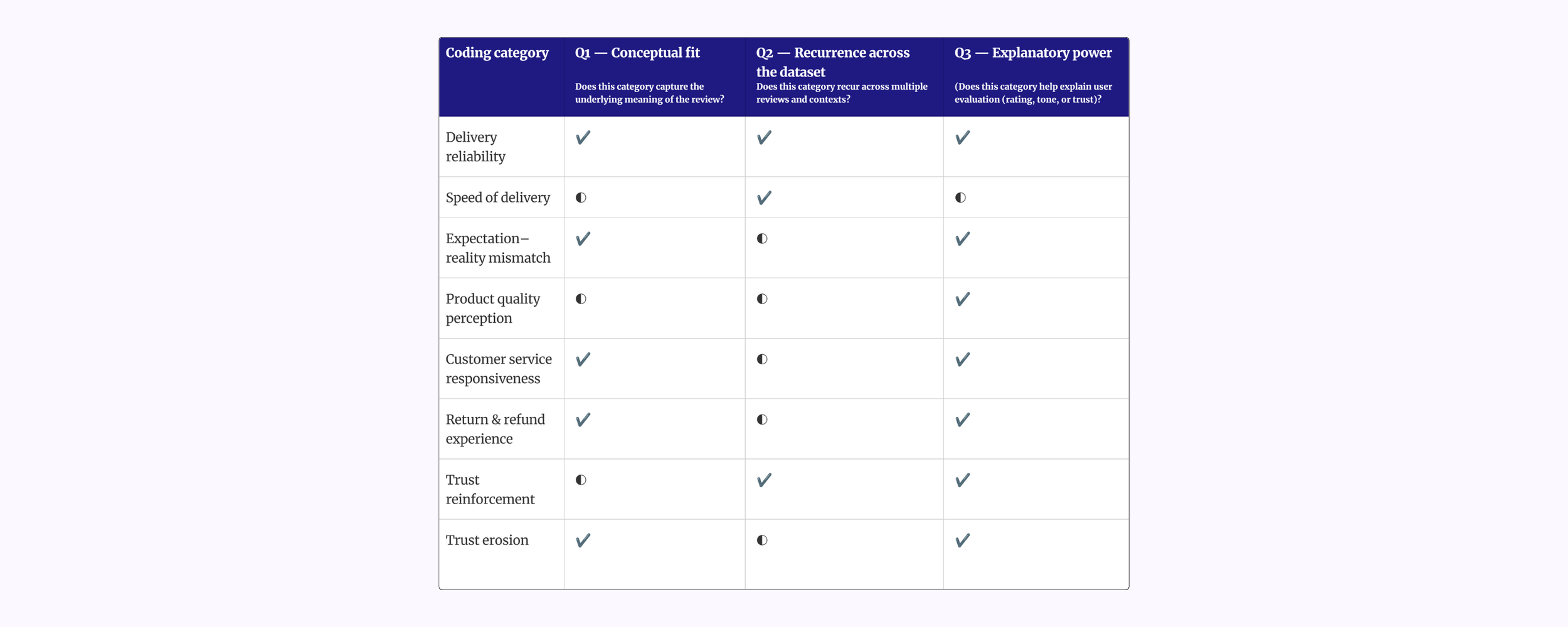
From data to pattern
To move from individual reviews to meaningful insights, the dataset was analyzed through qualitative coding.
Each review was examined for recurring themes, narratives, and trust related signals.
Similar codes were progressively grouped into higher categories, allowing dominant narrative patterns to emerge across the dataset.

From patterns to insights
Multiple recurring patterns emerged across the dataset.
The analysis focused on a subset of categories that showed:
High recurrence across reviews
Strong explanatory power in relation to trust, expectations, and decision making
Clear narrative structure, allowing comparison across different user experiences
From these categories, I extracted three key insights that I’ve developed further.

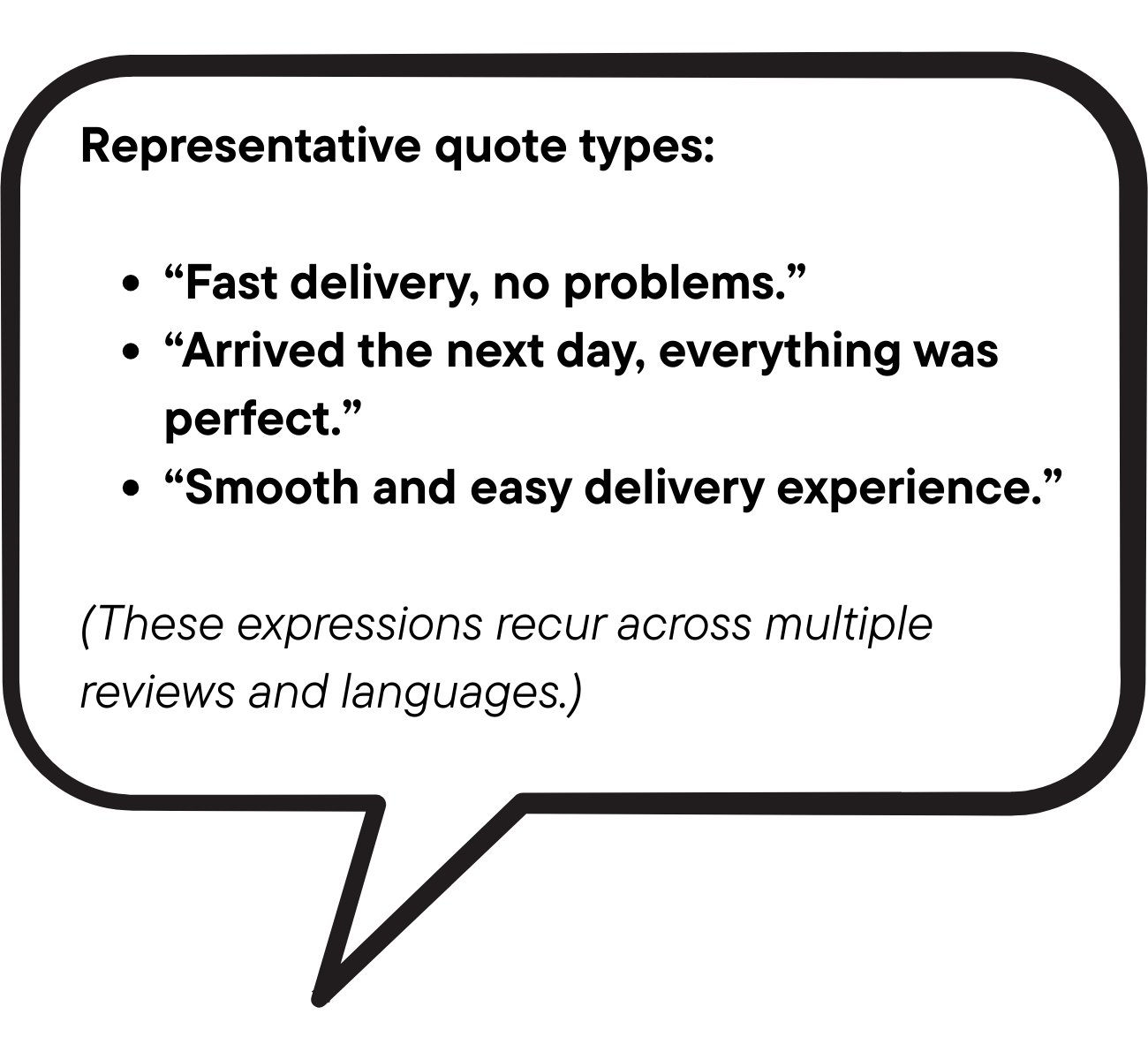
1. Trust is often inferred from operational reliability rather than from product experience
When delivery works smoothly, users assume the company is trustworthy, even without evaluating the product.
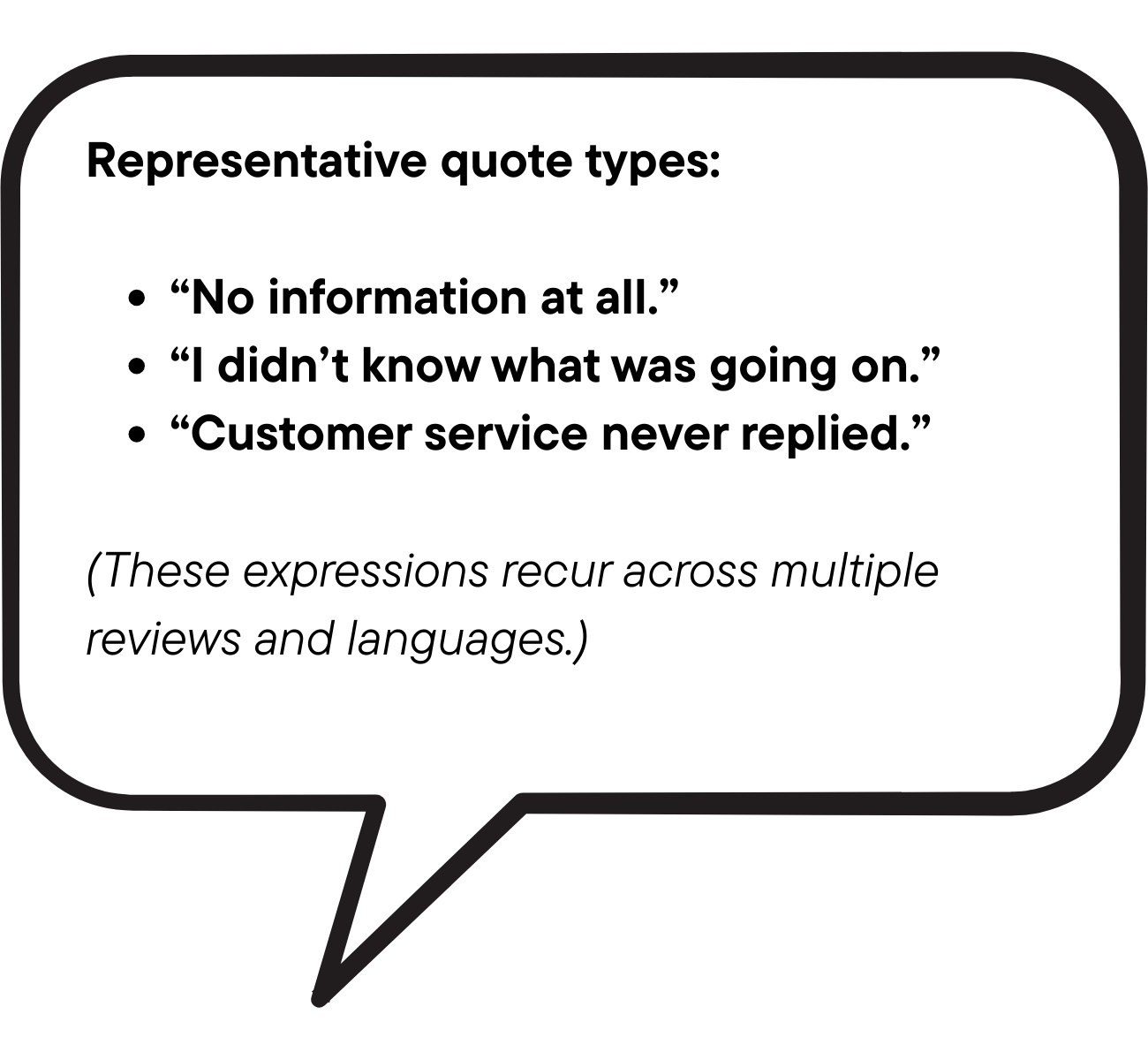
2. Silence damages trust more than problems do
Users can accept delays or issues but they lose trust when communication stops
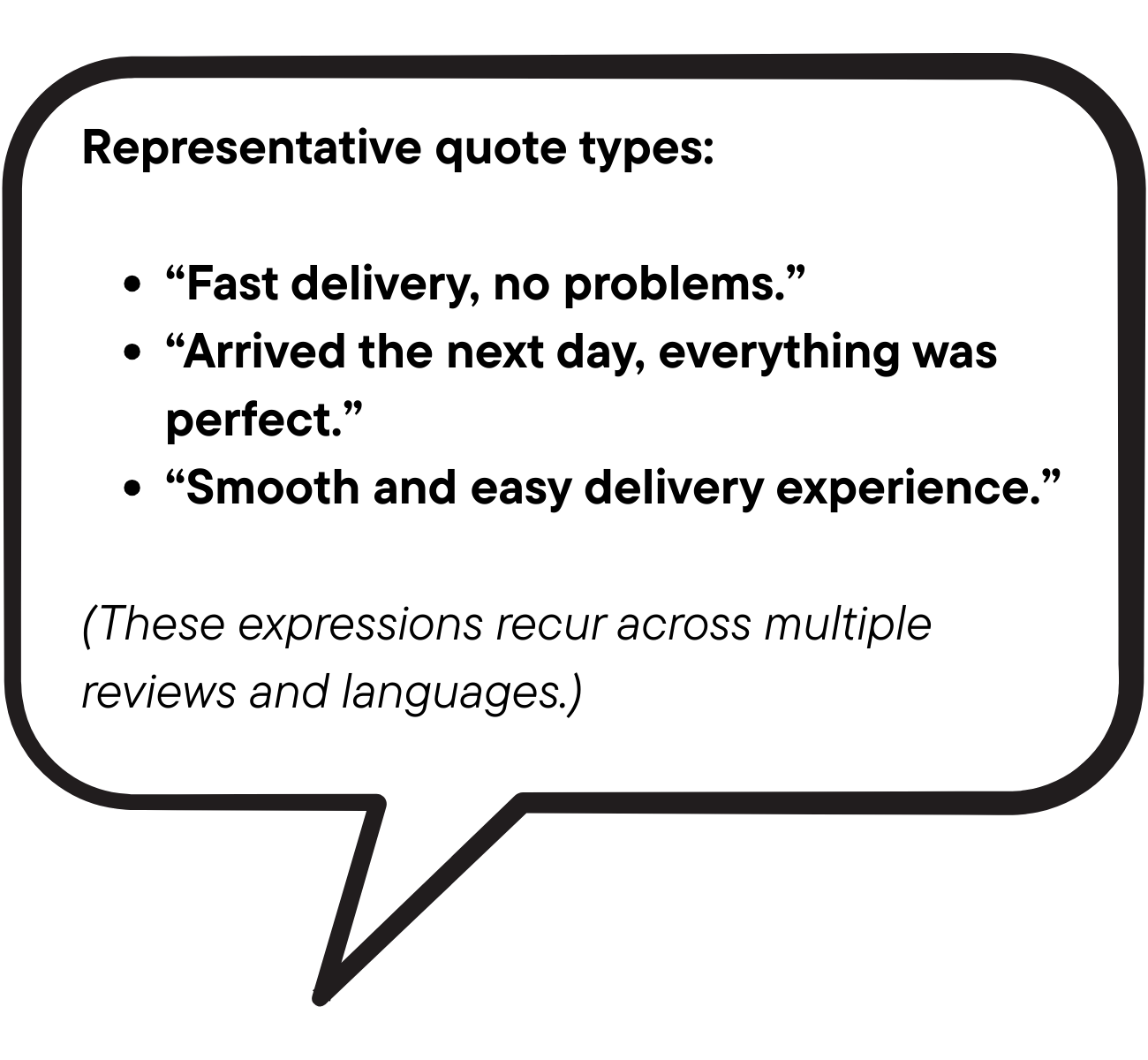
3. Users mainly review promises, not products
Users judge their experience by how closely reality matches theyr expectations
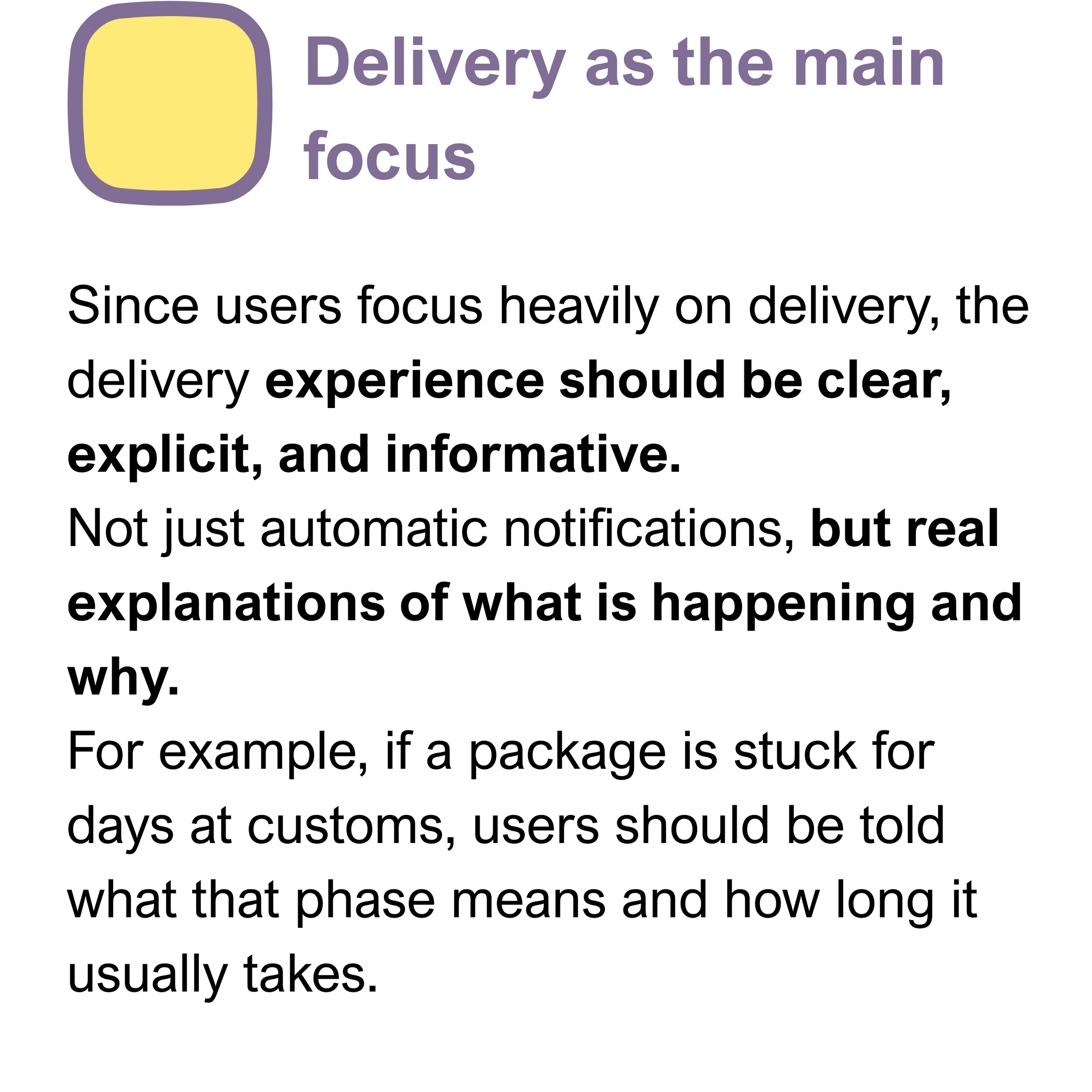
Design Implications


Want to work together?
Get in touch!